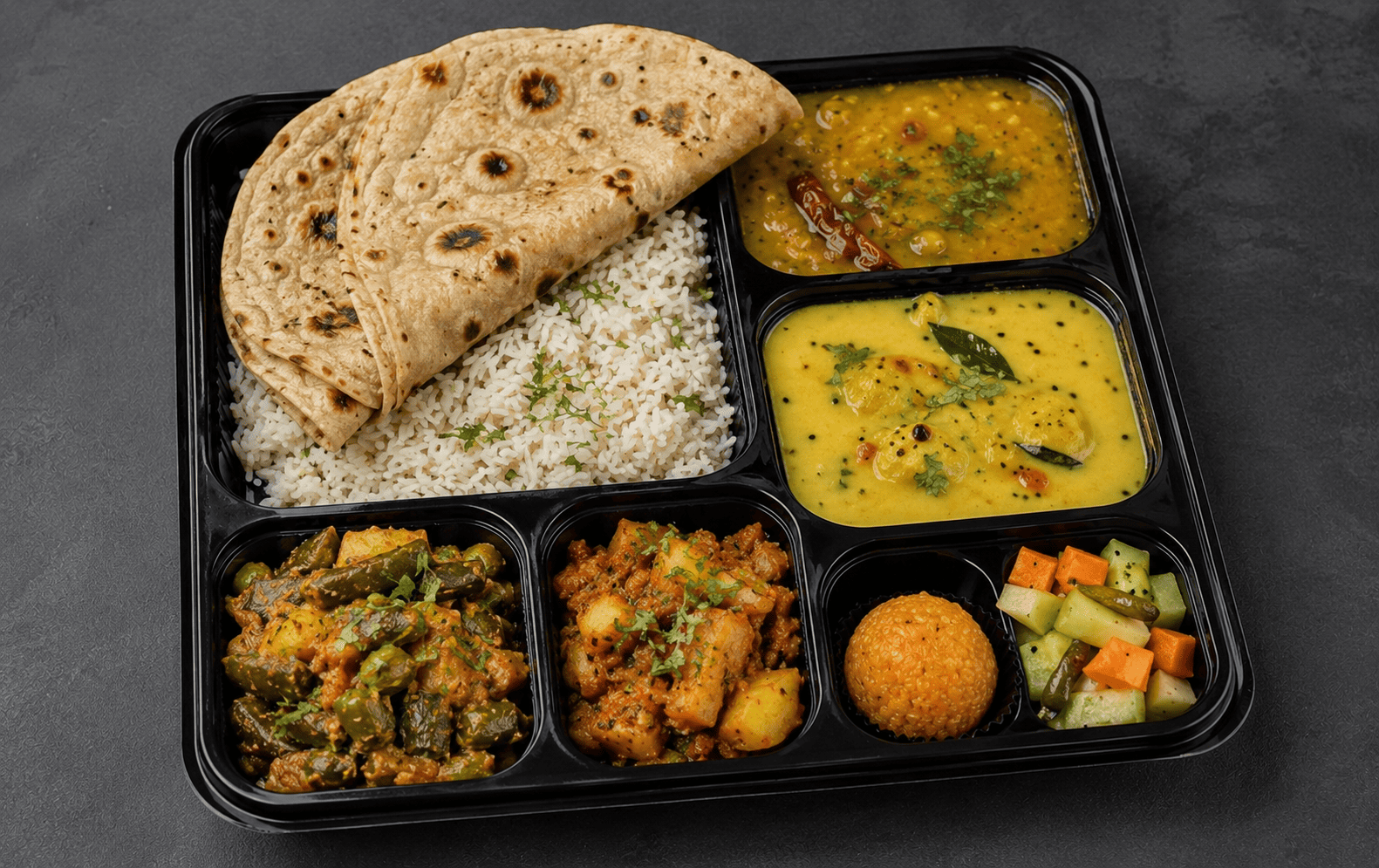
If people keep asking you to pack “a little extra” when you cook, you have probably wondered how to start a tiffin service from home. It is one of the few food businesses you can begin with the kitchen you already have, a few steel dabbas, and a handful of neighbours who are tired of eating out. This guide covers what you actually need before day one: licences, a menu you can cook every single day, pricing that leaves a margin, and how to find customers without spending on ads.
Is a home tiffin service right for you?
A tiffin service is a daily commitment, not a weekend bake sale. Before you set up anything, be honest about three things: whether you can cook the same quality on a Tuesday in July as on a festival weekend, whether your kitchen can handle ten to fifteen meals at once, and whether someone in the house can manage deliveries or packing while you cook. If the answer is yes to all three, you have the bones of a real business.
What home cooks typically earn
A small operation of 15 to 20 daily tiffins at ₹100 to ₹130 per meal brings in roughly ₹45,000 to ₹75,000 a month in revenue, with ingredient and packaging costs usually taking 45 to 55 percent of that. Treat these as ballpark numbers; your city, cuisine, and portion size will move them.
Step 1: Get the paperwork sorted
This is the part most people put off, and it is the part that protects you. In India, a home kitchen selling food needs to be registered with FSSAI.
FSSAI registration for a home kitchen
If your annual turnover is under ₹12 lakh, you need Basic Registration, which costs about ₹100 a year and is applied for online through the FoSCoS portal. Once you cross ₹12 lakh a year you move to a State Licence, which costs ₹2,000 to ₹5,000 a year. Keep your 14-digit registration number handy; customers and platforms will ask for it, and you should print it on your menu card.
Other things worth having
- A separate bank account or UPI ID for the business so you can see what you actually make
- A basic GST check: most small home kitchens stay under the threshold, but confirm with an accountant once you pass ₹20 lakh in turnover
- If you are outside India, check your city's cottage-food or home-kitchen rules; most Canadian provinces, US states, and the UAE have a specific registration for home food businesses
Step 2: Build a menu you can repeat for months
The best tiffin menus are boring to the cook and exciting to the customer. That means a fixed weekly rotation built from dishes you can make with your eyes closed, with one or two “special” days that give people something to look forward to.
A simple weekly rotation
| DayDal / gravySabziBaseExtra | ||||
| Monday | Toor dal tadka | Aloo gobi | Roti + rice | Salad |
| Tuesday | Rajma | Bhindi masala | Jeera rice + roti | Pickle |
| Wednesday | Kadhi | Lauki or tinda | Roti + rice | Papad |
| Thursday | Chana masala | Mixed veg | Roti + rice | Raita |
| Friday | Dal makhani | Paneer bhurji | Roti + rice | Sweet |
| Saturday | Sambar | Beans poriyal | Rice + 2 idli | Chutney |
Swap in your own region's dishes. A Gujarati kitchen will run on dal-bhaat, shaak, and rotli; a Punjabi one on chole and sarson; a South Indian one on sambar, rasam, and poriyal. The point is the structure, not the specific dishes.
Decide what you will not do
Say no to custom orders in the first three months. One customer asking for no onion, another for extra spice, and a third for gluten-free roti will quietly double your cooking time. Offer one veg plan, maybe one Jain variant, and grow from there.
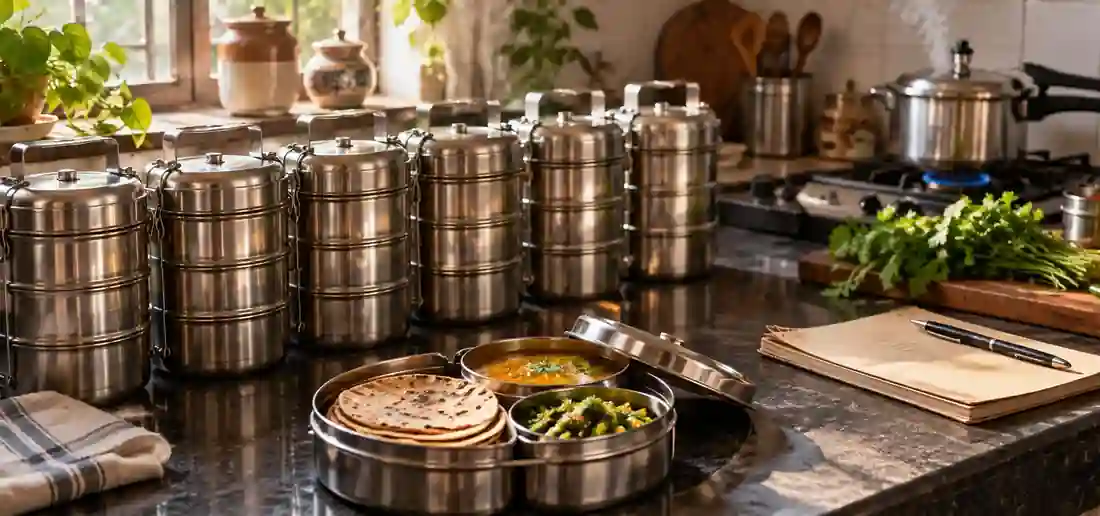
Batch-cooked, packed and lined up: a typical home-kitchen lunch run of tiffins.
Step 3: Price it so you actually make money
Most new tiffin services underprice because they compare themselves to a street-side thali. You are delivering home-cooked food to someone's door every day; price it like that.
A quick costing method
- Cost one full tiffin's ingredients at retail prices (dal, vegetables, flour, oil, spices). For a standard veg tiffin this usually lands at ₹40 to ₹60.
- Add packaging: around ₹8 to ₹15 per meal for disposable containers, or a one-time deposit model if you use steel dabbas.
- Add delivery: your own time, a helper, or a delivery charge passed to the customer.
- Add gas, electricity, and your labour at a realistic hourly rate.
- Multiply the total by 1.6 to 1.8 for your selling price.
Offer three plans: single trial tiffin (highest per-meal price), weekly, and monthly (lowest per-meal price, paid in advance). The monthly plan is where your cash flow lives.
Step 4: Set up the kitchen for volume
You do not need a commercial kitchen to start, but you do need to cook differently than you do for family dinner.
- Batch prep the night before: soak dals, chop vegetables, and knead dough so the morning is only cooking and packing.
- Buy two large pressure cookers and a wide kadhai. These three pans will handle 20 meals.
- Standardise portions: use the same ladle and the same cup for every tiffin so customers get the same amount every day.
- Keep a hygiene routine: hairnet, clean apron, separate chopping boards, and a cooling step before you seal containers so food does not sweat.
- Label every box with the customer's name and the date.
Step 5: Find your first 20 customers
You do not need a marketing budget. You need a trial offer and a way for people to find you.
Start where you are
Your apartment WhatsApp group, the PG or hostel nearby, the office complex down the road, and the gym or coaching centre where people are already thinking about food. Offer a free or half-price trial tiffin to the first ten people. Ask every happy customer to forward your menu to one person.
List your kitchen where customers are already searching
People looking for a tiffin service search online, and most home kitchens are invisible there. TiffinWorld exists to fix that. Vendor registration and profile setup are free: create your profile through the vendor login, add your menu, plans, and area, and customers in your locality can find you and send an inquiry directly. You talk to the customer, you deliver, you get paid.
Keep customers after the first month
Message customers the night before with tomorrow's menu. Deliver inside the window you promised. When you are running late, say so before they ask. Rotate in one new dish a month and ask what they thought. Those four habits retain more customers than any discount.
Frequently asked questions
How much does it cost to start a tiffin service from home?
Most home cooks start with ₹10,000 to ₹25,000: FSSAI registration, two or three large cooking vessels, a first stock of containers, and a week of ingredients. If you already own the cookware, it can be less.
Do I need an FSSAI licence for a home tiffin service?
Yes. In India any home kitchen selling food needs at least FSSAI Basic Registration (turnover under ₹12 lakh a year, roughly ₹100 a year), applied for on the FoSCoS portal.
How many tiffins can one person cook a day?
With batch prep the night before, one cook can comfortably handle 15 to 25 meals. Beyond that you will need a second pair of hands for packing and delivery.
Should I use steel dabbas or disposable boxes?
Steel dabbas are cheaper over time and customers like them, but you need to collect, wash, and return them. Disposable boxes cost ₹8 to ₹15 per meal and suit office deliveries where pickup is awkward. Many kitchens start with disposables and switch regulars to steel.
How do I handle delivery?
For your first 20 customers, keep deliveries within a two to three kilometre radius and do them yourself or with a family member. Once you cross that, hire one delivery helper for the lunch window or partner with a local delivery service.
Can I run a tiffin service outside India?
Yes. Indian tiffin services are common in Canada, the US, the UK, and the Gulf. Register under your local home-food or cottage-food rules, and list your kitchen on TiffinWorld so Indian families in your city can find you.
Ready to take your first order?
You have the recipes; what you need is the first ten customers. Register your home kitchen on TiffinWorld, add your menu and plans, and start taking inquiries from people in your area. If you are still deciding what to cook, have a look at what other kitchens offer on the TiffinWorld menu page and read what customers look for when they choose a tiffin service.